
The Indispensable Role of Pentair Fairbanks Nijhuis Fire Pumps
In the complex landscape of modern infrastructure, fire safety stands as an uncompromising pillar of protection for lives, assets, and operational continuity. A robust fire suppression system is not merely an optional addition but a fundamental necessity, with the fire pump at its very heart. For discerning organizations seeking unparalleled reliability and performance, Pentair Fairbanks Nijhuis fire pumps represent the pinnacle of engineering excellence. At Baskara Prima Sarana, we understand the critical demands of effective fire protection. As a premier supplier fire pumps and a trusted partner in Indonesia, we are dedicated to equipping your facilities with the most advanced and dependable solutions available, ensuring your system delivers when it matters most.
Our commitment extends beyond merely supplying equipment; we provide comprehensive expertise that underpins every aspect of fire safety, from meticulous design to long-term maintenance. With a focus on products like Pentair Fairbanks Nijhuis fire pumps, we empower businesses to achieve and exceed stringent safety standards, safeguarding their future against unforeseen emergencies. This article will delve into the profound significance of these advanced pumping solutions, exploring their technical merits, compliance with critical standards, and how they integrate into a complete, resilient fire safety framework.
Mastering Fire Protection: The Core of NFPA 20 Compliance
Achieving superior fire protection begins with adherence to established global benchmarks, chief among them being the NFPA 20 fire pump standard. This comprehensive guideline, developed by the National Fire Protection Association, dictates the criteria for the installation of stationary pumps for fire protection. It’s not just a set of rules; it’s a blueprint for reliability, performance, and, ultimately, saving lives and property. Compliance with NFPA 20 ensures that a fire pump system is designed, installed, and tested to perform effectively under the most critical conditions.
A fire pump operating under NFPA 20 standards must demonstrate consistent flow and pressure characteristics, ensuring that water is delivered adequately to sprinklers and standpipes throughout a facility. This meticulous standard covers everything from pump types and drivers to controllers, suction and discharge piping, and even the power supply. For Pentair Fairbanks Nijhuis fire pumps, meeting and exceeding NFPA 20 requirements is inherent to their design philosophy, making them a preferred choice for engineers and facility managers who prioritize uncompromised safety and regulatory compliance.
Critical Parameters for Robust Fire Pump System Design
The foundation of any effective fire suppression system lies in its fire pump system design. This crucial phase involves a detailed analysis of a building’s specific hazards, water supply characteristics, and the hydraulic demands of the fire suppression system it will serve. A well-engineered design ensures that the pump selected is optimally sized and configured to meet the required flow and pressure for the entire protected area, even during peak demand scenarios. Incorrect sizing or poor design can lead to catastrophic failures, rendering the entire system ineffective.
Engineers specializing in fire protection consider a myriad of factors, including the type of occupancy, the area to be protected, the height of the building, and the available water source (municipal, tank, or reservoir). The design must account for friction losses in piping, elevation changes, and the specific needs of various suppression devices like sprinklers, hydrants, and standpipes. Baskara Prima Sarana, as a specialist in fire safety solutions, provides expert consultation and support for designing systems that integrate Pentair Fairbanks Nijhuis fire pumps seamlessly, guaranteeing compliance and optimal performance from conception to commissioning.
Engineering Excellence: The Spectrum of Pentair Fairbanks Nijhuis Fire Pumps
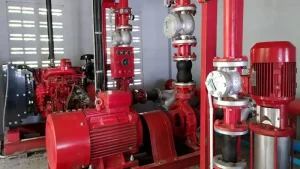
Pentair Fairbanks Nijhuis fire pumps stand out in the industry due to their robust construction, innovative engineering, and unwavering commitment to performance. Pentair, a global leader in water solutions, brings decades of expertise to its Fairbanks Nijhuis fire pump division, resulting in products that are not only powerful but also incredibly durable and efficient. Their pumps are engineered to meet the most rigorous demands of fire suppression applications, offering a diverse range of configurations to suit virtually any operational requirement.
The reputation of Pentair Fairbanks Nijhuis fire pumps is built on a foundation of reliability, backed by extensive testing and continuous innovation. These pumps are designed to operate flawlessly, even after extended periods of dormancy, a critical factor for emergency equipment. Their advanced hydraulic designs ensure maximum efficiency, translating into lower operational costs and a smaller environmental footprint. When facilities choose these pumps, they are investing in a proven technology recognized globally for its role in safeguarding critical infrastructure and saving lives.
Assured Quality: The Significance of UL FM Approved Fire Pumps
In the realm of fire protection, mere performance is not enough; certification by independent, internationally recognized bodies is paramount. This is where the importance of UL FM approved fire pumps becomes evident. UL (Underwriters Laboratories) and FM Approvals are two of the most respected third-party certification organizations globally, setting the highest standards for product safety and performance. When a fire pump carries UL and FM approval, it signifies that it has undergone rigorous testing and evaluation, confirming its ability to perform reliably under fire conditions.
These certifications cover everything from the pump’s hydraulic performance and structural integrity to its electrical components and manufacturing processes. For Pentair Fairbanks Nijhuis fire pumps, achieving and maintaining UL and FM approvals is a testament to their superior quality and reliability. Choosing UL FM approved equipment provides building owners and authorities with the assurance that the system will activate and function as intended during a fire emergency, mitigating risks and ensuring compliance with insurance and regulatory mandates. Baskara Prima Sarana proudly offers UL FM approved fire pumps, providing peace of mind to our clients across various sectors.
Versatility in Action: Horizontal Split Case and Vertical Turbine Fire Pumps
The diverse requirements of fire suppression systems necessitate a range of pump types, each optimized for specific conditions and water sources. Pentair Fairbanks Nijhuis fire pumps offer robust solutions across this spectrum, notably with their horizontal split case and vertical turbine models, which cater to distinct installation and operational environments. Understanding the benefits of each is critical for optimal system design.
Horizontal Split Case Fire Pump: Ideal for High-Volume Applications
The horizontal split case fire pump is a workhorse in many fire suppression systems, renowned for its ease of maintenance and high-volume capabilities. Its design allows for the casing to be split horizontally along the shaft, making internal components such as the impeller and bearings easily accessible for inspection and service without disturbing the piping or motor. This design significantly reduces downtime for maintenance.
Horizontal split case pumps are typically installed where the water source is above or at the same level as the pump, allowing for positive suction pressure. They are highly efficient and can handle large capacities, making them ideal for commercial, industrial, and municipal applications that require substantial water flow for fire suppression. Their sturdy construction and reliable performance make them a cornerstone of many NFPA 20 compliant systems, delivering consistent pressure and flow when an emergency strikes.
Vertical Turbine Fire Pumps: Solutions for Deep Water Sources
For applications where the water source is below the pump’s elevation, such as from deep wells, reservoirs, or rivers, vertical turbine fire pumps provide an indispensable solution. These pumps are designed to be submerged in the water source, with the motor mounted above ground, driving a series of impellers located within the water. This configuration eliminates the need for priming and ensures a continuous, reliable water supply from challenging sources.
The vertical design also offers a significant advantage in terms of space saving, as the pump’s footprint at ground level is minimal. Vertical turbine fire pumps are particularly suited for facilities with limited floor space or those reliant on natural water bodies. Their ability to draw water from considerable depths, combined with the reliability associated with Pentair Fairbanks Nijhuis fire pumps, makes them a critical component for specialized fire suppression needs, ensuring that even remote or challenging water sources can be effectively utilized for fire protection.
Strategic Selection: Diesel vs Electric and Auxiliary Components
The choice between a Diesel vs electric fire pump driver is a pivotal decision in fire pump system design, impacting reliability, operational costs, and regulatory compliance. Both options offer distinct advantages and considerations, and the optimal selection often hinges on the specific power infrastructure of a facility, local regulations, and the overall risk assessment.
Electric fire pumps, powered by the building’s electrical supply, are generally more compact, quieter, and require less maintenance than their diesel counterparts. They are a common choice in urban areas with stable and reliable grid power. However, their dependence on the electrical grid means a backup power source, such as a generator, is often mandated to ensure continuous operation during a power outage, which is a critical scenario during a fire.
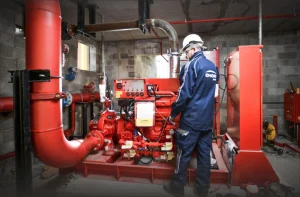
Diesel fire pumps, on the other hand, offer complete independence from the electrical grid, making them highly reliable in areas with unstable power or in facilities where power outages are a significant concern. They come with their own fuel supply, ensuring operation even when primary power is compromised. While they require more maintenance (fueling, battery checks, engine servicing) and are typically larger and noisier, their self-contained nature provides an unmatched level of resilience for critical fire suppression systems. The decision-making process for Diesel vs electric fire pump should always involve a thorough analysis by experienced fire safety engineers to ensure the most robust and compliant solution for a specific application.
The Silent Guardian: Understanding Jockey Pump Function
While the main fire pump is the undisputed hero during a fire event, a crucial yet often overlooked component ensures its readiness and longevity: the jockey pump function. This small, electrically driven pump plays a vital role in maintaining the static pressure within the fire suppression system piping, preventing nuisance starts of the larger, more powerful main fire pump.
The jockey pump function continuously monitors the system pressure. Small pressure drops, which can occur due to minor leaks in the system, temperature fluctuations, or slowly opening relief valves, would otherwise trigger the main fire pump to activate unnecessarily. The jockey pump automatically kicks in to replenish this lost pressure, keeping the system pressurized at all times. By doing so, it preserves the main fire pump for genuine fire emergencies, extending its operational life, reducing wear and tear on its components, and minimizing energy consumption. It is an integral part of an efficient fire suppression pump system, acting as a vigilant guardian, ensuring the system remains primed and ready without unnecessary activations.
Sustaining Performance: Maintenance and Parts for Longevity
The reliability of a fire pump system is not a ‘set it and forget it’ proposition. Like any critical mechanical system, it demands regular attention and proactive care. A diligently followed fire pump maintenance schedule is absolutely essential to ensure that Pentair Fairbanks Nijhuis fire pumps and all associated components perform flawlessly when an emergency arises. Neglecting maintenance can lead to unexpected failures, non-compliance with NFPA 25 (Standard for the Inspection, Testing, and Maintenance of Water-Based Fire Protection Systems), and potentially devastating consequences during a fire.
A comprehensive maintenance program goes beyond simple visual checks. It involves regular testing of the pump’s performance, lubrication of moving parts, inspection of electrical connections, and verification of control panel functionality. For diesel pumps, this includes fuel and battery checks, oil changes, and cooling system maintenance. For electric pumps, it involves checking power supply, circuit breakers, and motor integrity. Such rigorous adherence to a fire pump maintenance schedule guarantees that the entire fire suppression system remains in optimal working condition, ready to respond instantly and effectively, thereby maximizing its service life and safeguarding the investment made in fire safety infrastructure.
Proactive Protection: Implementing an Effective Fire Pump Maintenance Schedule
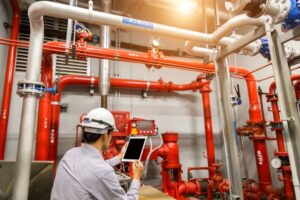
Implementing a structured and effective fire pump maintenance schedule is non-negotiable for ensuring the long-term reliability and compliance of any fire suppression system. This schedule should outline daily, weekly, monthly, quarterly, and annual checks and tests, performed by qualified personnel. Daily checks might include verifying pump readiness indicators, while weekly tests typically involve running the pump for a short duration without flowing water, known as a no-flow test, to confirm automatic starting and general operational integrity.
Monthly inspections delve deeper, checking gauges, valves, and batteries. Annual tests are the most comprehensive, involving a full flow test of the pump to verify its hydraulic performance against its rated capacity, ensuring it can deliver the required pressure and flow. This rigorous schedule, which Baskara Prima Sarana helps clients develop and adhere to, not only ensures operational readiness but also helps identify potential issues before they escalate into major problems, preventing costly repairs and system downtime. This proactive approach to maintenance is fundamental to the sustained effectiveness of your fire suppression pump system, including all Pentair Fairbanks Nijhuis fire pumps.
Genuine Assurance: The Importance of Authentic Pentair Pump Parts
The integrity and longevity of any mechanical system, especially a critical one like a fire pump, depend heavily on the quality of its components. When it comes to maintaining Pentair Fairbanks Nijhuis fire pumps, using only authentic Pentair pump parts is not merely a recommendation but a necessity. Genuine parts are manufactured to precise specifications, ensuring perfect fit, optimal performance, and compatibility with the original design. Using aftermarket or generic parts, while seemingly cost-effective in the short term, can lead to premature wear, reduced efficiency, and even catastrophic failure of the pump when it’s needed most.
Authentic Pentair pump parts guarantee that the pump’s performance characteristics, which are often certified by UL and FM, remain intact. They also ensure that any warranties remain valid. Baskara Prima Sarana understands this critical requirement and, as a trusted distributor firebanks nijhuis Indonesia, we are committed to supplying only genuine Pentair parts. Our access to original components and expertise in their installation ensures that your Pentair Fairbanks Nijhuis fire pumps continue to operate at peak performance, providing unwavering protection for your facility and upholding the highest standards of fire safety.
Your Partner in Uncompromising Fire Safety
In the demanding world of fire protection, there is no room for compromise. The stakes are too high. Pentair Fairbanks Nijhuis fire pumps stand as a testament to engineering excellence, offering unparalleled reliability, efficiency, and compliance with the most stringent global standards. From their robust design to their critical role in NFPA 20 fire pump systems, these pumps are an essential investment in the safety and continuity of any operation.
At Baskara Prima Sarana, we are more than just a supplier fire pumps; we are your dedicated partner in forging comprehensive and resilient fire safety solutions. Our expertise spans the entire lifecycle of your fire protection system, from sophisticated fire pump system design and meticulous installation to expert maintenance and the supply of genuine Pentair pump parts. We ensure that whether you choose a horizontal split case fire pump or vertical turbine fire pumps, alongside a powerful Diesel vs electric fire pump driver and an efficient jockey pump function, your system is fully optimized and compliant. As a premier distributor firebanks nijhuis Indonesia, we empower you with the confidence that comes from knowing your fire suppression infrastructure is built to perform, every single time.
To connect with us directly, please utilize our live chat feature below. Our dedicated marketing team is online and ready to assist you with all your fire pump needs.